


Almost every description of a perfume assumes you already hold a map. A scent is called a fruity floral, a woody amber or a modern chypre, and the words are offered as though they explain themselves. If you have ever wondered what the main perfume families are, the short answer is this: most of the fragrance world sits within four broad families, fresh, floral, amber and woody, with two historic structures, chypre and fougère, and the younger gourmand family alongside them. Each family then divides into subfamilies that describe its character more closely. A family is not a list of ingredients. It is a name for the overall impression a perfume leaves.
What a fragrance family actually is
A family groups perfumes by their dominant character, the impression that remains once the opening has settled, rather than by any single note. Two perfumes can share most of their materials and still belong to different families, because what decides it is which materials lead and how they are balanced. It works more like a musical genre than a recipe: a song does not need one particular instrument to be jazz.
Families are judged mostly at the heart and in the drydown, the slower stages explained in What is a Top, Middle and Base note in perfume? A bright citrus opening that gives way within half an hour to warm vanilla and resin makes an amber, not a citrus. This is why a family can feel misleading on a paper strip and entirely right on skin an hour later.
Where the map came from
For most of perfumery's history, families were simply the working language of perfumers. Formal classifications arrived in the twentieth century. The first circular diagram of scent groups was published by an Austrian perfumer in 1949. In France, the professional society of perfumers published a classification in the 1980s that named seven families: citrus, floral, fougère, chypre, woody, amber (then called oriental) and leather, each divided into subfamilies. At around the same time, a fragrance wheel was drawn up that arranged the families in a circle, so that each one shades into its neighbour: floral into floral amber, amber into woody amber, woody into mossy woods, and fresh round again to floral. It has been redrawn several times since, gaining woods, fruity and aromatic subfamilies as tastes and materials changed.
Most family descriptions used today come from one of these two maps, or from a simplified blend of both. The four family version, fresh, floral, amber and woody, is the one most people meet first, because it is the easiest to hold in the mind.
At a glance
- Fresh: citrus, green, aromatic and watery materials; bright, airy and quick to lift
- Floral: a single flower or a bouquet in the lead; the largest family of all
- Amber: resins, vanilla, balsams and spice; warm and enveloping
- Woody: cedar, sandalwood, vetiver and patchouli; dry to creamy
- Chypre: citrus over a mossy, woody base; poised and structured
- Fougère: lavender, coumarin and moss; aromatic and clean
- Gourmand: edible notes such as vanilla, caramel and praline
Different classifications draw these lines in different places. There is no single official version.
Fresh: citrus, green, aromatic and water
Fresh perfumes are built on brightness: materials that lift quickly and smell clean, cool or sharp. Citrus is the oldest branch, bergamot, lemon, mandarin and grapefruit, and it descends from the light citrus waters worn in Europe since the eighteenth century. Green perfumes smell of cut stems, leaves and grass, often through galbanum, a sharp resin, or violet leaf. Aromatic perfumes lean on herbs such as lavender, rosemary, sage and basil. Watery perfumes, sometimes called aquatic or marine, rely on modern molecules that suggest sea air, rain or wet stone, effects no natural material could supply, while ozonic notes aim for the smell of clean air itself. Many maps also file fruity perfumes here, though fruit turns up in almost every family.
Citrus materials are among the most volatile in perfumery, so a purely citrus composition tends to be fleeting, a trade explored in Why Some Perfumes Linger, and Others Fade. Most modern fresh perfumes anchor their brightness on musks or woods so that something of it stays, which is why a family is never a promise about how long a perfume will last. Concentration and the materials in the base decide that.
Floral: the largest family
Nearly every perfume contains flowers somewhere. A perfume belongs to the floral family when flowers lead. Some are built around a single bloom, rose, jasmine, iris or tuberose, and others around a bouquet in which no one flower dominates. White florals, jasmine, tuberose, orange blossom and gardenia, are the richest and most heady, and carry a faintly animal warmth that comes from natural compounds called indoles.
Floral perfumes divide in several directions. Fruity florals lift their flowers with pear, peach, lychee, berries or apple, and are among the most common structures in modern perfumery. Soft or powdery florals pair flowers with iris, aldehydes and musk for a clean, cosmetic softness; when musk takes the lead, the result is usually called a floral musk. Floral ambers, once known as florientals, set orange blossom or jasmine over sweet spice and a warm resinous base.
One thing the floral family rarely admits: many of its best loved flowers cannot be extracted at all. Lily of the valley, lilac, freesia, peony and most gardenia give little or no usable natural oil, so the version in a bottle is an accord, a portrait the perfumer paints from other materials. That is not a shortcut. It is some of the finest work in the craft, and it is part of why modern molecules matter so much, as Naturals, Isolates, and Modern Molecules explains.
Amber: warmth, resin and a word that changed
Amber perfumes are warm, rounded and enveloping, built on resins such as labdanum, benzoin, myrrh and frankincense, alongside vanilla, tonka bean, balsams and spice. The amber in a perfume is neither the fossilised tree resin used in jewellery, which has almost no scent, nor ambergris. It is an accord, traditionally labdanum, vanilla and benzoin blended into a soft, golden glow.
For most of the twentieth century this family was called oriental. The fragrance industry has largely moved to amber in recent years, recognising the older term as a vague Western shorthand for a vast and varied part of the world. Its subfamilies include soft amber, where incense and powdery notes keep things gentle; amber proper, rich with resin and vanilla; spicy amber, warmed with cinnamon, clove or cardamom; and woody amber, where the warmth rests on dry woods and patchouli.
Woody: from dry cedar to creamy sandalwood
Woody perfumes are led by woods and roots, and they cover a wider range than the name suggests. Cedar is dry and pencil sharp. Sandalwood is creamy, soft and almost milky. Vetiver, a grass root, is smoky and earthy. Patchouli, a leaf, is dark, damp and slightly sweet. Agarwood, often called oud, is resinous and dense. Many of the woody effects in modern perfumes come from synthetic molecules, some of them extraordinarily powerful and dry, which is why a woody perfume can feel either quietly close to the skin or remarkably broad.
The family divides into dry woods, mossy woods and woody ambers. Leather, built on birch tar, smoke and certain dark florals and spices, sits nearby; the French classification treats it as a family of its own, while simpler maps fold it into woody.
Chypre and fougère, the families named after perfumes
Two of perfumery's families take their names from individual perfumes, each copied so widely that its name became a category. Fougère is French for fern, and it names a perfume of 1882. Ferns have almost no smell, so the fougère is an imagined scent: lavender, coumarin and oakmoss, often with bergamot and geranium. Coumarin, the hay and almond smelling material found in tonka beans, had first been made in a laboratory only fourteen years earlier, which makes the fougère one of the earliest families built around a synthetic. Its herbal, clean, slightly sweet character became the foundation of many classic barbershop scents.
Chypre is the French name for Cyprus, and it names a perfume of 1917, though the idea is older. Its structure is a contrast: bright bergamot above a dark, mossy, woody base of oakmoss, labdanum and patchouli. It divides into floral chypres, fruity chypres and leather chypres. Restrictions on oakmoss over recent decades have changed the family more than almost any other, which is why many modern chypres are rebuilt on patchouli and treated moss materials, a story told in When a Perfume Changes Its Mind. Because both sit between other families, simpler maps tend to scatter them, filing fougère under fresh or aromatic and chypre under mossy woods.
Gourmand, the youngest family
Gourmand perfumes borrow from the kitchen and the confectioner: vanilla, caramel, praline, chocolate, coffee, honey, almond and candyfloss. Sweet materials had been used in perfume for a long time, but gourmand became a recognised family in its own right only in the early 1990s, when a new style made edible sweetness the point rather than a supporting note. Some classifications still fold gourmands into amber, since the two share vanilla and warmth; the difference is that a gourmand smells of something you could eat.

Musk deserves a mention here too, because it often travels with gourmands and florals. The clean, soft musks of modern perfumery are entirely synthetic, and some classifications treat musky or skin scents as a small family of their own.
Why one perfume can belong to two families
Most modern perfumes are hybrids, and their family names say so. A fruity floral, a woody amber, a floral chypre: the second word names the family, the first describes the direction it leans. A perfume sitting on the border between two families is not confused. It is usually doing exactly what it was composed to do.
It is worth knowing, too, that there is no official or regulated classification. The family printed on a box or listed on a website is decided by whoever describes the perfume, and the same scent can be filed as a floral amber in one place and a gourmand in another. Families are a genuinely useful tool, but they are a description, not a measurement, and they are also used to sell. The same is true of gender. No family belongs to men or to women; florals were marketed to one and fougères to the other for most of the last century, and that habit is a matter of advertising, not chemistry. Trust your nose over the label when the two disagree.

Finding the family you lean towards
The quickest way to find your family is to look back at the perfumes you have loved, paying attention to how they felt rather than to their lists of notes. They usually gather in one family, or in two families that sit side by side on the wheel. To explore, move to the neighbour rather than across the circle: someone who loves a soft floral is far more likely to enjoy a floral musk or a floral amber than a dry, smoky vetiver.
Give any new family time on skin. Because families are judged by the heart and the drydown, a first sniff tells you about the opening and very little else. Warmth helps ambers and gourmands bloom, while fresh families can feel thin in the cold, so the same family can read differently in August than it does in January.
The family you return to is a home address
The family you keep returning to is not a rut or a lack of adventure. It is closer to a home address: the part of the scent world where you feel most like yourself. Tastes do move, but they tend to move next door rather than across town, a floral lover drifting towards floral musks, an amber lover finding woods. And the families you leave behind stay where you left them, attached to the years you wore them, for reasons explored in The Scent of Remembering.
Why any of this matters
A map does not tell you where to go. It tells you where you are, and what lies close by. Knowing the families turns a wall of unfamiliar bottles into a landscape you can read: this one is near the place you love, that one is a long way from home, and this other one sits right on a border you have never crossed. That is a small kind of freedom. It means the next perfume you fall for need not be found by luck, and the ones that already hold your memories can be understood for what they are.
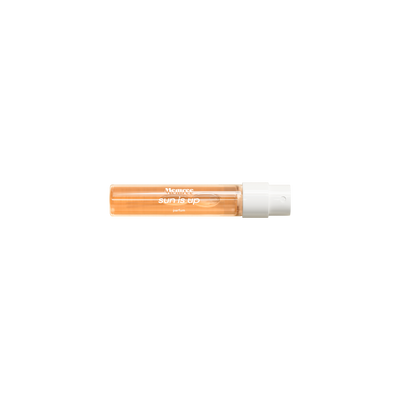
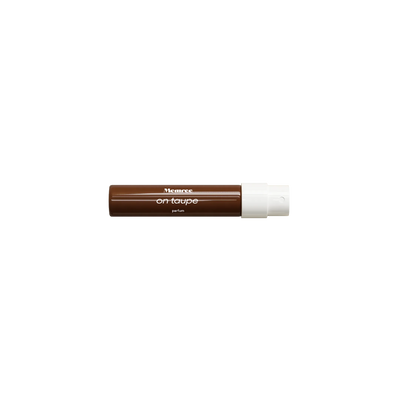
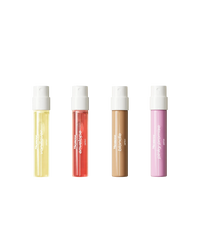
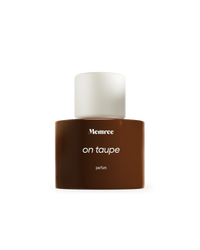
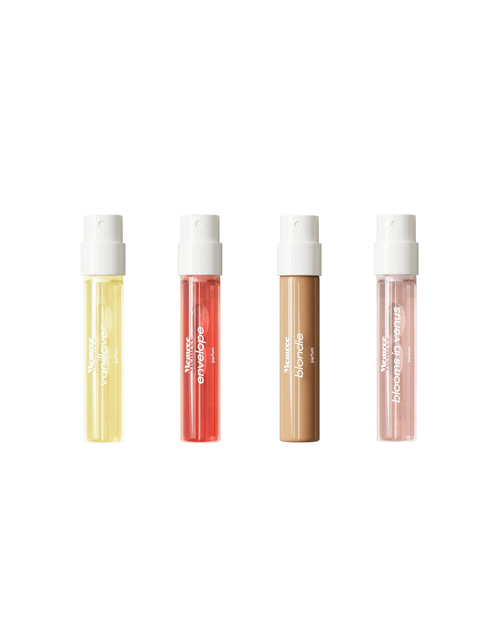
A note from Memree: we compose our parfums at extrait strength, 28 to 33 per cent perfume oil, a concentration we set individually for each scent, where it holds its depth and carries through the day. The honest way to know a fragrance, and the family it belongs to, is a day on your own skin. It's why every Memree journey starts with a discovery set: four scents, worn properly, before you commit to a bottle.
A few common questions
What are the four main fragrance families?
The simplest map divides perfume into fresh, floral, amber and woody. Fuller classifications add chypre, fougère, gourmand and sometimes leather or musk, and every family divides into subfamilies such as fruity floral, soft amber or mossy woods.
Why is oriental perfume now called amber?
Oriental was the long standing name for warm, resinous, vanilla and spice led perfumes. Much of the fragrance industry now uses amber instead, as the older word was a vague Western label for a huge and varied region. The perfumes it describes are the same.
What are chypre and fougère perfumes?
Both are classic structures named after individual perfumes. A chypre sets bright bergamot over a mossy, woody base of oakmoss, labdanum and patchouli. A fougère, French for fern, blends lavender, coumarin and oakmoss into a clean, herbal, slightly sweet accord.
Can a perfume belong to more than one family?
Yes, and most modern perfumes do. Names such as fruity floral or woody amber describe a family and the direction it leans, and different sources may file the same perfume in different places.
Are some fragrance families masculine or feminine?
No. Families describe how a perfume smells, not who should wear it. The habit of pairing florals with women and fougères with men came from marketing, and any family can be worn by anyone.